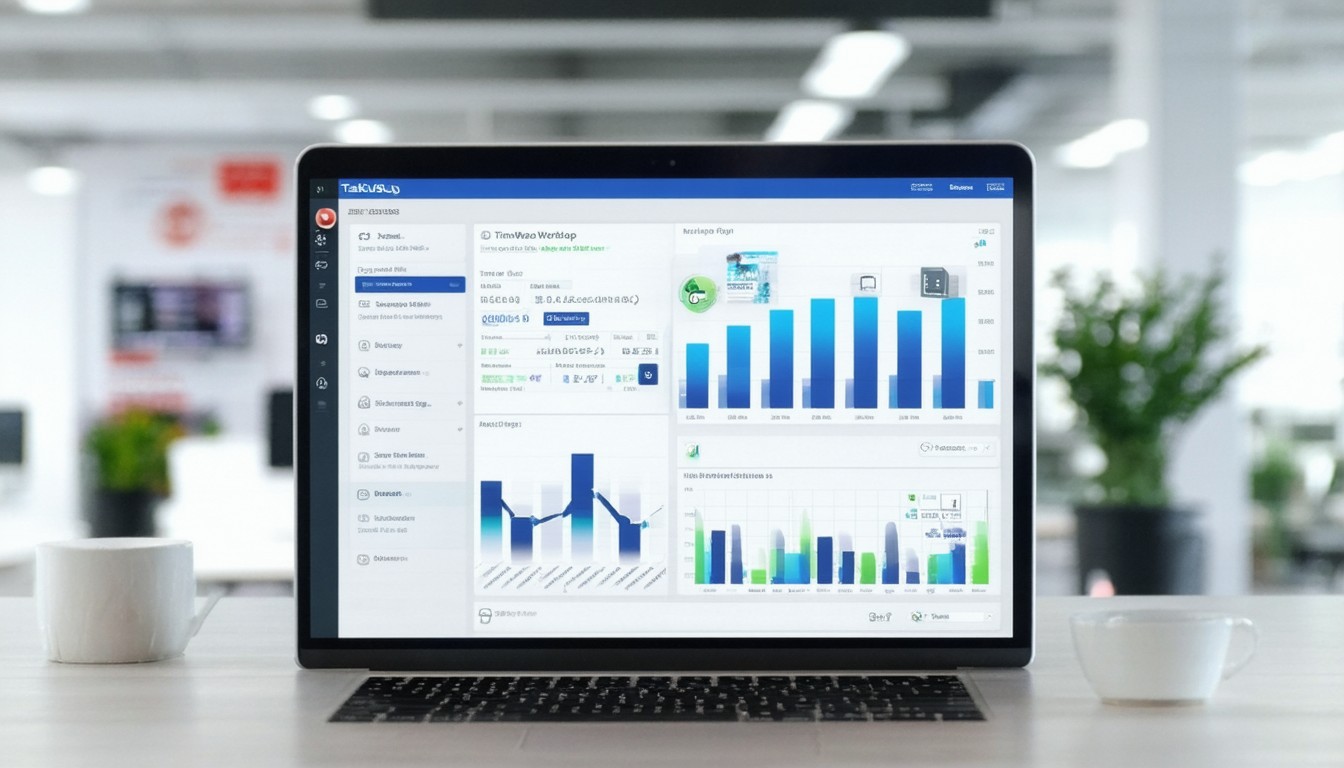
In today’s business landscape, organizations are compelled to streamline workflows amid rapid technological shifts and growing customer expectations. The drive to optimize time—and not just resources—can often determine whether companies lag behind or lead their sectors. TaskUs, an industry leader in digital outsourcing, has introduced the “Time Wrap” concept: a targeted approach to refining time management and operational excellence within teams. The strategy is less about squeezing more activity into each hour, and more about eliminating waste, digitizing the right processes, and freeing up teams for higher-value work.
“Time Wrap TaskUs” is rapidly becoming a reference point for companies seeking to turn hours into strategic assets. Through technology, data-driven insights, and human ingenuity, TaskUs pushes the boundaries of workflow efficiency. This article examines how such smart solutions can redefine productivity—and what lessons global organizations can draw from this evolving paradigm.
Unpacking ‘Time Wrap’ at TaskUs: Principles and Practice
Effective workflow transformation hinges on an understanding of how time is truly spent within teams. TaskUs’s Time Wrap model assesses, analyzes, and acts upon time utilization at both macro and micro levels. In practice, their teams map out every stage of a process—identifying repetitive workflows, bottlenecks, and hidden delays.
Principles Driving the Time Wrap Model
At its core, the Time Wrap approach is grounded in three principles:
- Precise Measurement: Leveraging data analytics and digital tracking to map out workflows in real-time.
- Process Automation: Using smart automation to handle repetitive, rule-based tasks.
- Continuous Feedback: Providing teams with performance insights, enabling ongoing self-optimization.
“Organizations that fail to analyze time-to-completion at a task level risk missing exponential gains. You can only manage what you measure—Time Wrap is all about making invisible inefficiencies visible,” says a TaskUs process optimization manager.
Practical Example: Streamlining Customer Support Workflows
For example, one e-commerce client leveraged the Time Wrap methodology with TaskUs to dissect the support ticket lifecycle. By digitally tracking agent touchpoints, TaskUs identified recurring idle periods—moments when information gathering or approvals stalled the resolution process. Automation was then introduced to route tickets based on urgency and priority, reducing average response times by a significant margin.
Such micro-optimizations add up substantially. Not only did customer satisfaction scores rise, but agent capacity increased without additional hiring—a rare win-win in today’s tight labor market.
The Role of Data and Technology in TaskUs’s Efficiency Playbook
Intelligent Process Automation (IPA)
TaskUs’s approach to automation is not generic; it is built on intelligent process automation (IPA), blending bots, machine learning, and human-in-the-loop design. This multi-layered strategy allows for context-aware automations—such as real-time language translation for global support teams, or predictive ticket assignment based on historical peak hours.
Visibility and Insights Through Analytics
Data visibility stands at the heart of Time Wrap’s effectiveness. TaskUs utilizes advanced workflow analytics platforms to track every minute spent across customer-facing and internal processes. Insight dashboards make it possible to answer crucial questions:
- Where are the process bottlenecks?
- How much time do agents spend on manual input versus exception handling?
- Which steps can be standardized or eliminated entirely?
These granular insights drive ongoing optimization cycles and support agile, data-driven decision-making.
Human-Centric Change Management: The TaskUs Difference
While many organizations fall into the trap of automating indiscriminately, TaskUs maintains a sharp focus on change management and employee empowerment. The company’s philosophy is clear: automation and analytics should augment, not replace, the human side of work.
Engaging Teams with Transparent Metrics
Empowerment begins with transparency. At TaskUs, frontline teams have access to both personal and team-wide performance data—fostering a culture of ownership and healthy competition. Teams participate in regular feedback loops, suggesting tweaks to scripts, workflows, and even bot logic.
Training for a High-Impact Workforce
Change can be intimidating, particularly where jobs appear threatened by automation. TaskUs invests in retraining and upskilling, positioning its people for higher-value roles and reducing resistance to new technologies. Employees are encouraged to develop digital fluency, contributing to long-term workforce resilience.
Real-World Impact: Measured Results and Industry Trends
Forward-thinking organizations in sectors as diverse as fintech, healthcare, and retail are deploying TaskUs-led Time Wrap initiatives. While quantitative outcomes are naturally client-specific, recurring themes include:
- Double-digit reductions in average handling time for support calls and tickets
- Increased first-contact resolution rates
- Significant improvements in NPS (Net Promoter Score) and CSAT (Customer Satisfaction Scores)
- Reduced overtime and operational costs
Beyond direct cost savings, many clients report a less tangible (but equally vital) benefit: higher employee morale and lower turnover, resulting from the removal of monotonous tasks.
Industry Perspective: The Continuous Need for Agility
The Time Wrap approach is resonating far beyond outsourcing circles. As more enterprises rethink office-centric work and embrace distributed, digital-first models, the ability to surface—and close—efficiency gaps quickly is becoming a competitive must-have.
Conclusion: Turning Time Into Strategic Advantage
The Time Wrap methodology at TaskUs demonstrates that a well-structured, technology-powered approach to workflow can yield remarkable gains without compromising the human dimension of work. By combining intelligent automation, transparent analytics, and robust change management, TaskUs clients are converting “lost minutes” into strategic wins. For leaders tasked with navigating operational complexity, the lesson is clear: workflow efficiency is not a static goal, but a dynamic, ongoing commitment.
Strategic Recommendation: Organizations seeking to streamline workflows should start by mapping current processes at a granular level, invest in the right mix of IPA technologies, and—crucially—prioritize empowering people alongside digital transformation.
FAQs
What is the Time Wrap methodology at TaskUs?
Time Wrap is a workflow optimization strategy that uses data analytics, automation, and continuous feedback to reduce inefficiencies and improve team productivity.
How does TaskUs use automation to streamline workflows?
TaskUs leverages intelligent automation to handle repetitive and rule-based tasks, enabling human workers to focus on more complex or value-added activities.
Does the Time Wrap approach replace employees with automation?
No—TaskUs’s model emphasizes using automation to support, not eliminate, human roles. The company invests heavily in upskilling and retraining employees for evolving roles.
What industries benefit most from the TaskUs Time Wrap model?
Time Wrap has seen success in customer support-intensive industries such as e-commerce, fintech, healthcare, and retail, but its principles are broadly applicable.
How quickly can companies see results with Time Wrap solutions?
While results vary by process complexity, many clients report noticeable improvements in efficiency, employee satisfaction, and cost savings within a few months of implementation.



 1/276 Bronte Rd , Sydney , Australia