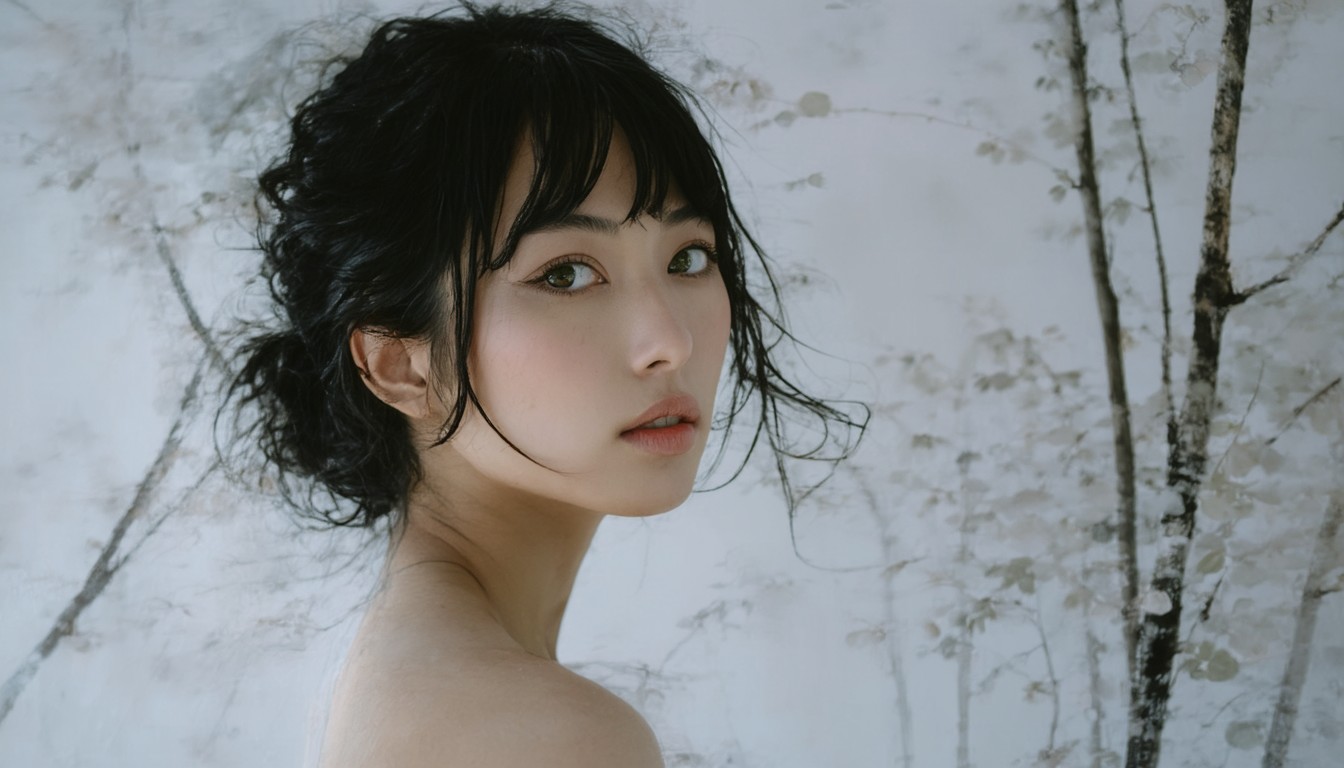
In the intricate tapestry of Japanese contemporary art, a number of voices have emerged to challenge, illuminate, and inspire. Among them stands Aya Hitakayama, a photographer and mixed-media artist whose contemplative works have struck chords both at home and abroad. Fusing themes of memory, the environment, and the subtle interplay of tradition with modernity, Hitakayama’s visual language resonates in galleries and critical circles alike. Her presence in international exhibitions and nuanced approach to image-making have positioned her as a significant, though perhaps understated, influence in the evolving landscape of Japanese visual culture.
Early Life and Influences
Born in a region of Japan marked by both industrial growth and natural beauty, Hitakayama’s formative years shaped her fascination with the thresholds between the artificial and the organic. Raised in the late 20th century during Japan’s era of rapid urbanization, she observed first-hand the transformation of landscapes and the nuanced memories embedded within them.
Educators and peers describe her early works as deeply introspective, yet technically sophisticated—a rare blend in a field often split between conceptual and formalist pursuits. During university in Tokyo, Hitakayama encountered both postwar Japanese photography and Western avant-garde movements, sowing the seeds for her eventual hybridized style.
Artistic Evolution: From Landscape to Liminality
Photography as Witness and Meditation
Early in her career, Aya Hitakayama concentrated on landscape photography, often exploring semi-industrial sites or rural spaces in flux. Her series from the late 1990s and early 2000s paid homage to Japan’s rapidly shifting cityscapes and the encroachment of technology. Unlike many contemporaries, however, Hitakayama lingered in the subtle zones where nature and human intervention overlap rather than documenting stark juxtapositions or overt social critique.
Curators frequently cite her use of subdued color palettes and carefully controlled composition:
“Hitakayama’s work doesn’t shout; it hums. Her images reward patient viewing, revealing fragile narratives beneath calm surfaces,” one museum director noted during a retrospective in the late 2010s.
Incorporating Mixed Media and Installation
As her voice developed, Hitakayama expanded into installation and mixed media. She began integrating found objects, hand-written texts, and digital manipulations, turning her exhibits into immersive environments. Visitors might encounter suspended photographs alongside soundscapes or weathered relics arranged in contemplative tableaux. These spatial experiments serve to blur the line between documentation and lived experience, inviting introspection on how memories—individual and collective—are constructed and preserved.
Key Themes and Techniques
The Poetics of Absence: Memory and Place
A recurring motif across Hitakayama’s oeuvre is absence—the echo of something just out of frame, or a story implied rather than fully told. Critics have observed how her images often depict sites devoid of human figures but saturated with evidence of human life: abandoned toys, worn footpaths, remnants of rural shrines.
This thematic focus finds kinship with the philosophy of “mono no aware,” a Japanese term denoting a gentle appreciation of transient beauty. In Hitakayama’s lens, landscapes become repositories for memory, grief, and longing—a silent dialogue with the viewer.
Technology, Nature, and Change
Reflecting contemporary anxieties, Hitakayama’s recent projects have increasingly engaged with the interface between technology and the environment. In one notable exhibition, she juxtaposed drone imagery of leveled forests against intimate close-ups of regrowth, crafting a visual meditation on destruction and resilience. This approach aligns her with a cohort of Asian artists exploring ecological themes, but her work retains a distinctively meditative sensibility.
Technical Approach
From a technical standpoint, Hitakayama employs both analog and digital methods. She often prints her photographs on unconventional materials—rice paper, reclaimed wood, even fabric—lending physical presence to the ephemerality of her subjects. Subtle post-production techniques impart a dreamlike patina, erasing the boundaries between photography and painting.
Recognition and Impact
Critical Reception and Exhibitions
Hitakayama has been the subject of solo and group shows in Tokyo, Kyoto, Berlin, and New York, with her works featured in institutions that celebrate innovation in Asian art. Her style, noted for its restraint and emotional depth, has garnered a devoted following among collectors and critics.
In academic discourse, her contribution is often discussed in relation to the broader “New Photography” movement in Japan—a wave of artists redefining the photographic medium through hybrid practices and global dialogues. Leading figures in art criticism highlight the singular way Hitakayama bridges local narratives with universal concerns.
Influence on Contemporary Practice
The generational shift in Japanese visual arts is marked by more collaborative, cross-disciplinary practices. Hitakayama’s installations and workshops with younger artists have contributed to this cultural osmosis. Several emerging talents cite her mentorship as pivotal, particularly in encouraging the use of archival materials and site-specific storytelling.
Selected Works and Notable Series
“Traces” Series
Among her most celebrated projects, “Traces” spans nearly a decade and reflects Hitakayama’s ongoing investigation into vanished or altered spaces. Through haunting visuals and carefully annotated field notes, the series documents locations on the verge of erasure—old railway lines, abandoned schoolyards, coastal villages post-disaster. The work’s understated power lies in its capacity to evoke collective memory without resorting to nostalgia or overt didacticism.
Collaborative Projects
Hitakayama has also engaged in cross-border collaborations, notably with Korean and Taiwanese artists, exploring shared histories of displacement and urban transformation. These collaborative efforts have helped foster cultural dialogue amid ongoing geopolitical tensions, further cementing her reputation as both an artist and a connector.
The Enduring Relevance of Aya Hitakayama
In an age of accelerating change—environmentally, technologically, culturally—Aya Hitakayama’s artistry offers a counterpoint of stillness and reflection. Her photographs and installations remind viewers that histories can be found not only in monuments and headlines, but in the quiet corners of everyday existence.
Young curators and artists increasingly look to her work for models of subtlety and authenticity. As the boundaries of Japanese art continue to expand on the world stage, Hitakayama’s contributions quietly endure, shaping the ideals and aspirations of the next generation.
Conclusion
Aya Hitakayama’s journey from the transitional landscapes of her youth to her current status as an influential artist and photographer reveals an evolution marked by inquiry, experimentation, and reverence for memory. Her nuanced explorations of place, absence, and transformation have left a discernible imprint on contemporary Japanese art. As global audiences engage with her work, they encounter an artist who listens deeply to the silences of the world—and teaches us to see them anew.
FAQs
What is Aya Hitakayama best known for?
Aya Hitakayama is best known for her evocative photography and mixed-media installations that explore themes of memory, impermanence, and the interface between nature and technology in contemporary Japan.
Has Aya Hitakayama exhibited internationally?
Yes, Hitakayama has exhibited her work in major cities worldwide, including Tokyo, Berlin, and New York, and has participated in significant group and solo shows at respected art institutions.
What techniques does she use in her art?
She employs both traditional and digital photography, often printing on unconventional materials such as rice paper or wood, and incorporating found objects and text for immersive installations.
How does her work influence younger artists?
Hitakayama’s mentoring and collaborative projects have inspired many emerging artists to experiment with archival materials, site-specific storytelling, and subtle explorations of cultural memory.
What are some notable series in her portfolio?
Her “Traces” series is particularly well-regarded, documenting transformations in rural and urban landscapes and highlighting the quiet persistence of memory amidst change.



 1/276 Bronte Rd , Sydney , Australia