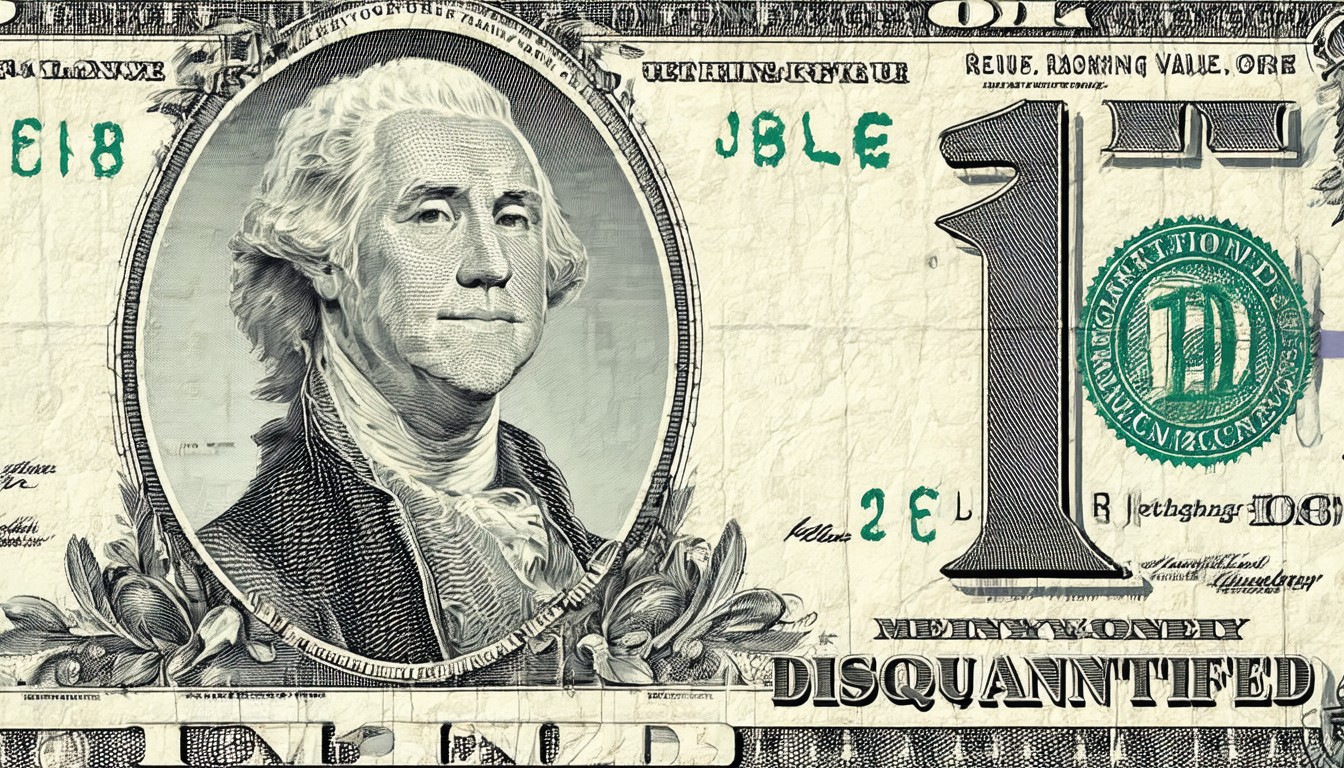
While currency has long stood as the backbone of global commerce and personal wealth, the ways in which societies perceive and measure value are rapidly evolving. The rise of alternative value systems—spanning digital innovation, sustainability, cultural capital, and social impact—challenges the dominance of traditional money. The term “money disquantified” crystallizes this shift: a movement toward redefining worth in forms not easily tallied by numbers on a bank statement. As this concept finds a digital home on platforms such as money disquantified .org, it surfaces novel conversations on what truly constitutes value in the 21st century.
Rethinking Value: Beyond National Currencies
The Limitations of Traditional Money
Money, as we know it, is a quantifiable medium of exchange that powers economic systems but doesn’t fully capture the richness of human life or the complexity of societal advancement. In practice, traditional currency is narrow in scope:
- It often excludes environmental costs and social benefits.
- It undervalues unpaid labor (like caregiving) and non-market contributions.
- It can exacerbate inequality by reducing diverse forms of value into uniform financial terms.
Prominent economists and social theorists have criticized this reductionist view. Nobel Laureate Amartya Sen, for example, emphasized that development is best measured by “capabilities” and freedom, not just income or GDP growth.
Non-Monetary Value in a Digital Era
Today, new technological platforms make the measurement and recognition of non-monetary value possible at scale. Examples include:
- Time banking systems, where hours worked are directly exchanged for services rather than currency.
- Digital social credit systems in select cities, rewarding productive citizenship with opportunities rather than cash.
- Carbon credits, allowing environmental stewardship to accumulate into tangible rewards.
“As economies digitize and decentralize, there’s an emerging realization: wealth is no longer just about possessing money—it’s about cultivating meaning and impact,” notes Dr. Lara Greenfield, a researcher in alternative economies.
The Rise of Alternative Value Frameworks
Social and Environmental Value Metrics
Global megatrends such as climate change and widening socio-economic divides push organizations to rethink value measurement. Environmental, social, and governance (ESG) metrics, for instance, enable companies to quantify their societal impact alongside financial returns. The proliferation of “triple bottom line” accounting—focusing on people, planet, and profit—underscores this shift.
A significant share of leading corporations now issue integrated annual reports, transparently conveying both financial and nonfinancial performance. Major institutional investors increasingly analyze such metrics; as a result, flows into ESG-related funds have seen double-digit global growth year over year.
Distributed and Community-Owned Value
Blockchain technology and decentralized finance (DeFi) have seeded new models for distributing value beyond traditional currencies and institutions. Community-owned tokens, cooperative businesses, and peer-to-peer exchange protocols allow collective value creation to be shared among contributors, users, and stakeholders—sometimes entirely outside fiat money systems.
Real-World Scenario: Local Currencies and Mutual Aid
When economic crises hit, local currencies and barter networks often flourish. From the Brixton Pound in the UK to time-dollar models in North America, communities have demonstrated resilience by relying on alternative forms of exchange that prioritize trust, reciprocity, and local production over maximizing profit.
money disquantified .org: Mapping the Ecosystem of Value
money disquantified .org has emerged as a digital nexus mapping the shifting value landscape. Its content, research, and networks foster interdisciplinary debate about reframing value beyond price tags.
Key Themes and Research Initiatives
- Value in the Data Economy: Exploring how personal data, attention, and participation become assets in digital ecosystems.
- Sustainable Prosperity: Researching models that prioritize ecological balance and collective well-being.
- Cultural and Creative Capital: Spotlighting creative work and cultural contributions whose impact defies traditional monetization.
Application and Impact
By convening thinkers from economics, sociology, technology, and philosophy, money disquantified .org inspires policymakers and entrepreneurs to pilot new value mechanisms. Its case studies document success stories—like social enterprises measuring “well-being dividends”—and failures, offering a holistic view of the global experimentation underway.
Measuring What Matters: Emerging Tools and Challenges
Evolving Indicator Systems
With greater awareness of money’s limits, initiatives like the Genuine Progress Indicator (GPI) and Gross National Happiness (GNH) indexes are gaining traction. These frameworks draw on indicators such as:
- Environmental health
- Community engagement
- Psychological well-being
- Educational attainment
By integrating these metrics into governance and investment, societies make more informed, ethical choices.
Barriers to Adoption
Nevertheless, obstacles remain. Standardizing alternative metrics is complex, and skepticism persists in financial markets. The risk of “impact washing”—where superficial claims mask business-as-usual behavior—highlights the need for rigorous verification and accountability.
“Metrics must not merely decorate reports. They must become actionable commitments that shape decisions and resource allocations,” urges economist Serena Wolff.
The Future: Towards a Plural and Purposeful Value System
What does the future hold for the concept of money disquantified? If current trajectories continue, it’s reasonable to expect:
- Further diffusion of decentralized, community-driven value systems.
- Greater integration of non-monetary indicators in both public policy and private sector reporting.
- A culture shift—particularly among younger generations—towards defining prosperity in terms of meaning, sustainability, and interconnectedness.
Organizations and governments embracing these changes position themselves at the forefront of innovation and resilience.
Conclusion
The traditional boundaries of money are dissolving as economies and societies recognize a broader spectrum of value. Platforms like money disquantified .org illuminate new frameworks for assessing worth, connecting research, community practice, and technology. As these alternative value systems mature, their integration challenges established models while promising a more holistic and sustainable vision of prosperity. The true test will be translating these ideas into measurable, lasting impact—an endeavor that requires both bold experimentation and sober accountability.
FAQs
What does “money disquantified” mean?
It refers to understanding and measuring value in ways that go beyond the limits of conventional currency, encompassing social, environmental, and personal factors.
How are companies measuring non-monetary value today?
Many leading businesses use ESG (Environmental, Social, and Governance) metrics and integrated reporting to assess impacts on people and the planet alongside profits.
Can alternative value systems replace traditional money?
While unlikely to fully replace currency, alternative systems can supplement financial transactions, strengthen communities, and drive more inclusive prosperity.
How does blockchain support new forms of value?
Blockchain enables decentralized ownership, community tokens, and peer-to-peer exchanges, allowing for shared value creation and transfer without relying solely on national currencies.
Why is measuring value beyond money important?
Relying only on monetary measures can overlook important contributions to wellbeing, sustainability, and equity, leading to incomplete or even harmful decisions at the societal level.
What role does money disquantified .org play in this movement?
The platform curates research, convenes diverse thinkers, and spotlights innovations that redefine value, helping guide broader conversations and practical experimentation.


 info@superlot2.com
 1/276 Bronte Rd , Sydney , Australia